Lawn Mowing in Teddington

Lawn mowing in Teddington should keep a garden looking cared for without turning the grass into a short, stressed carpet. Our service focuses on regular, tidy cuts for domestic lawns, with attention to edges, finish quality and the practical details that help grass stay even through the growing season. If you want a dependable way to keep on top of routine mowing, this page explains the main work and the options that sit around it.
We provide straightforward lawn care that is suited to front gardens, back gardens and shared green spaces where neat presentation matters. That can include a defined cut height, path and border finishing, and a sensible mowing rhythm for the time of year. Good mowing is more than just taking the grass down; it is also about avoiding scalping, managing clippings properly and leaving the surface consistent enough to recover well between visits.
Alongside mowing itself, many customers also need a broader garden routine that keeps the rest of the space from becoming overgrown. Where useful, we can combine lawn work with services such as garden maintenance, hedge trimming and garden clearance. That helps keep the job practical rather than piecemeal, especially when a lawn sits within a larger garden that needs edging, shaping or occasional cut-back work.
Routine mowing and neat lawn finish
A regular mowing visit is usually the simplest way to keep grass under control, but the cut still needs thought. Different lawns behave differently, and the right approach depends on how fast the grass is growing, how thick the turf has become and whether the surface is level or uneven. We aim for a clean finish that looks orderly from the first glance and still suits the lawn’s condition underneath.
For customers who want a wider upkeep plan, we can discuss how mowing fits alongside other outdoor work. Useful supporting pages include services overview for a broader look at what is available, landscape gardening where a lawn sits within a larger redesign, and landscaping for projects that change the structure around the grass. These pages are helpful when the lawn is part of a bigger garden improvement rather than a stand-alone task.
Mowing is often most effective when it is paired with a few practical choices: keeping blades sharp, avoiding excessively low cuts, and allowing the lawn to recover after growth spurts. These details matter because they affect both appearance and resilience. If the grass is long, thick or slightly neglected, it may need a more careful first cut before a regular pattern can be established. That helps the lawn settle into a manageable routine rather than being shocked by one severe pass.
What we can include with a mowing visit

Many lawns need more than a single pass across the centre. A thorough mowing visit may also involve edging where practical, trimming awkward strips that a mower cannot easily reach and making sure the finish around paths and borders is tidy. These small details can change the whole impression of the garden, particularly when the grass meets paving, beds or fences and the eye is drawn to the edges first.
When overgrowth is part of the job, it can be sensible to combine mowing with other work rather than treating the lawn separately. Relevant support pages include tree lopping and removal when shade or falling debris is affecting the ground, decking services where the lawn borders a hard landscaping feature, and about us if you want to understand the wider business set-up before making an enquiry. Each has a distinct place in a larger garden plan.
In practice, the best mowing result comes from matching the service to the condition of the grass. A light tidy on an already maintained lawn is different from a first visit after a period of neglect. We take the work as it comes and focus on a finish that is even, sensible and easy to maintain afterwards. The aim is always a clean and orderly lawn, not a rushed cut that leaves missed patches or uneven lines.
Options for regular lawn care
Some customers simply want occasional help, while others prefer a repeated mowing pattern during active growth. Both approaches can work well if the lawn receives the right level of attention. A repeated visit is useful when you want to avoid sudden surges of growth, while a one-off appointment can suit a seasonal tidy, a pre-event refresh or a lawn that has only recently become harder to manage.
Supporting pages can help you plan the surrounding work. For pricing structure and quotation details, see pricing and quotes. If you are also thinking about general upkeep rather than grass alone, garden maintenance gives a broader context. When a lawn is part of a property refresh, landscape gardening can be useful for understanding work that goes beyond mowing into wider garden changes.
There are a few practical things that help any mowing job run smoothly, and they belong together rather than being repeated throughout the page. First, it is useful to know the lawn size and whether there are narrow access points. Second, it helps if the grass is reasonably clear of toys, hoses or loose obstacles. Third, if you have any preferred finish, such as a slightly longer cut during dry weather, mentioning it early gives a better outcome. Clear instructions keep the work efficient and the result closer to what you want.
More than the lawn itself
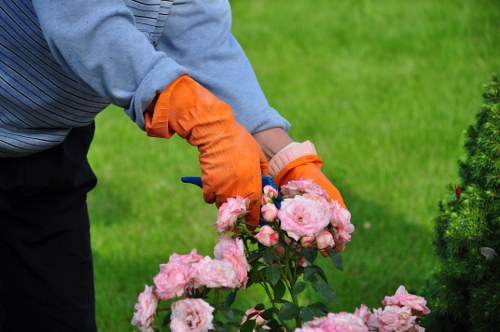
Some gardens need the lawn bringing back into shape as part of a larger tidy-up. Grass can be affected by nearby hedges, trees, beds or paths, and mowing alone may not be enough to make the whole space feel maintained. In those cases, a mix of related work can be more useful, especially if the aim is to improve the look of the entire garden rather than the grass in isolation.
That is why customers often pair mowing with hedge trimming, garden clearance or tree lopping and removal. A hedge that overhangs the lawn can drop shade and debris, while a cluttered garden makes it harder to mow properly. Where the area around the grass needs attention too, combining the work can create a cleaner result with fewer repeat visits to sort the same overgrown edges.
We keep the focus on what is sensible for the garden in front of us. That means not forcing unnecessary work into the visit, but also not stopping at the smallest possible task when a more complete tidy would be more helpful. If a lawn is sitting beneath branches, beside a neglected border or alongside a hard surface that needs edging, the mowing plan can take those factors into account and still remain straightforward.
Preparing for a quotation
A clear quotation starts with a clear understanding of the job. It helps to share the lawn’s approximate size, how long it has been since it was last cut and whether the garden has any awkward access points. Those details let the work be assessed more accurately and reduce the chance of misunderstandings later. If the lawn is part of a larger outdoor area, mentioning that at the outset is also useful.
The most practical enquiries are usually the ones that describe the lawn honestly and simply. If there are slopes, rough patches, dense growth or obstacles around the edge, say so. If you are not sure how much work is needed, that is fine too; the point is to give enough detail for a sensible response. Useful information does not need to be lengthy, but it should be accurate enough to reflect the actual condition of the grass and the surrounding space.
For customers comparing related services, the supporting pages can help you decide what belongs in the same visit. lawn mowing remains the core service, while recycling and sustainability may be relevant where garden waste handling matters as part of a wider clearance. If you are ready to discuss the work, please request a quotation.
About Teddington
Teddington is a riverside district in the London Borough of Richmond upon Thames, set on the north bank of the River Thames between Strawberry Hill and Hampton Wick. Its setting has long been shaped by the river, the towpath and the presence of Teddington Lock, which marks the upper limit of the Tideway and is one of the best-known features of the area. The lock and weir were completed in the nineteenth century, and the surrounding river landscape remains central to the character of the place. Teddington Station, opened in 1863, strengthened the area’s connection with central London and helped it develop as a suburban community while still retaining a recognisable high street and local identity. The older built environment includes a mix of Victorian and Edwardian housing, later residential streets and a commercial centre clustered around the main road. Bushy Park lies nearby, adding extensive open space, tree-lined paths and historic landscape interest to the wider locality. The park is closely associated with the royal landscape of Hampton Court, while nearby Marble Hill Park and the riverbank routes give the district further green and waterside variety. Teddington itself also has a quieter civic character than some neighbouring centres, with schools, churches, local shops and community facilities creating an everyday rhythm that complements its more prominent landmarks. The area’s name is often linked with the historic village that grew into a suburban settlement, and much of its appeal comes from that balance of river scenery, transport links and settled residential streets.
Seasonal growth and lawn condition

Grass rarely behaves the same way all year. In active growing periods, lawns can thicken quickly, while drier spells may leave the surface looking stressed if it is cut too low or too hard. A sensible mowing approach takes these changes into account and keeps the lawn looking managed without pushing it beyond what the turf can comfortably handle. The result is usually a steadier appearance over time rather than dramatic ups and downs.
When a lawn has a mixture of healthy growth and patchy areas, the mower setting and cutting pattern matter more than usual. A careful pass can help preserve weaker areas, particularly where the ground has compacted or where previous cutting has left uneven lengths. insurance and safety and health and safety policy are available for customers who want to see how the business approaches working practices and site awareness. Those pages sit alongside the service information rather than replacing it.
Seasonal changes also affect what customers notice after the cut. In spring and early summer, fresh growth can make the garden look transformed after a tidy mow. Later in the year, the same lawn may need a lighter touch and a slower, more considered pass. The aim is consistency: a lawn that suits the season, the conditions and the level of upkeep the garden can realistically sustain.
Useful choices around access and layout
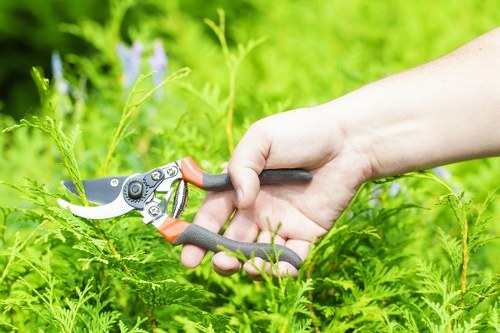
Not every lawn is set out in a simple rectangle, and that is where layout awareness becomes important. Narrow side access, curved borders, steps, raised edges and small split-level gardens can all affect how mowing is done. A good result depends on working with the shape of the space, not pretending every garden offers the same easy route from one end to the other. That is especially true where the lawn joins paving or planting in a tight arrangement.
If the garden includes difficult boundaries or dense planting, it may be worth looking at related pages such as landscaping, decking services and services overview to see how mowing fits into the wider outdoor setting. These pages are most useful when the lawn is only one part of a mixed garden design. For a direct next step, request a quotation and share the basic details of the area.
Keeping the finish practical
The most useful mowing service is one that leaves the lawn easy to live with afterwards. That means tidy edges, a level-looking surface and clippings handled in a way that suits the condition of the grass. On some visits, leaving finely cut clippings can be sensible; on others, collection or a cleaner finish may be the better choice. The right option depends on the state of the lawn rather than a one-size-fits-all rule.
Where a garden has built up a backlog of work, it can be sensible to combine mowing with other maintenance tasks that restore order around the lawn. modern slavery statement and privacy policy are available as company information pages, while the practical service pages remain the better place to understand the work itself. In day-to-day terms, what matters most is getting the lawn back to a manageable state and keeping it there without unnecessary fuss.
If you are unsure whether a simple mowing visit is enough, start by describing the present condition of the grass and the surrounding garden. That gives a better basis for deciding whether you need mowing alone or a broader tidy-up. Begin with the lawn, then add the extra work only where it earns its place.